


From 23 to 25 June 2026, Immersive Tech Week brought Europe’s immersive technology community to Katoenhuis in Rotterdam for three days of conferences, showcases, matchmaking and sector-focused discussion. OPENVERSE was represented by partner XR4Europe, which produced part of the event programme and was a facilitator for matchmaking at the event.
The Dutch initiative
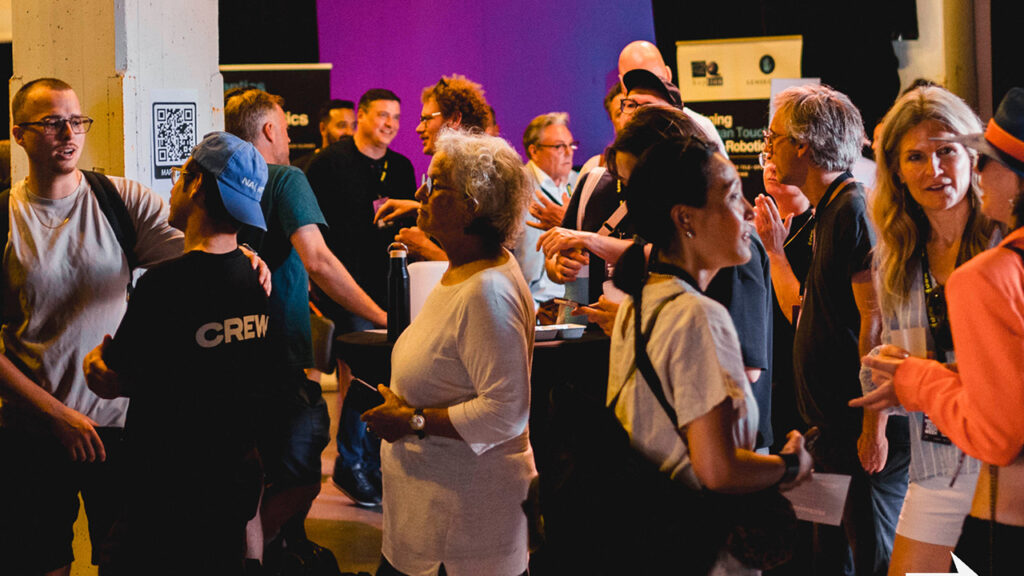
Several major European and Dutch initiatives used the event to present opportunities and connect with stakeholders. CIIIC, the Dutch initiative supporting creative technology and immersive innovation, had a visible presence throughout the programme. In the session “CIIIC Learning Communities – Matchmaking & Funding”, Heleen Rouw opened the discussion on Learning Communities and the more than €10.8 million being directed towards collaboration between education, research and the immersive experience industry in the Netherlands. The session then moved into practical pitches, roundtables and matchmaking for organisations working with immersive technologies for learning, training and development.
EIT Culture & Creativity also presented opportunities for cultural and creative organisations, including funding, investment and entrepreneurship support. Susannah Montgomery contributed to the event’s focus on how Europe can better support creators and entrepreneurs working at the intersection of culture, technology and immersive media. These discussions were also reflected in the session “Funding Opportunities in Europe’s Immersive Landscape”, which mapped funding pathways from Creative Europe MEDIA to EIT Culture & Creativity and CIIIC.
The cultural programme also showed how immersive technologies are entering more established art forms. “The Future Stage: Opera, AI and Immersive Performance”, moderated by Diandra de Lima of FEDORA, brought together cases from the Finnish National Opera, the Philharmonia Orchestra and the Opéra National de Paris. The session explored how XR, AI and interactive design can help classical music and opera reach new audiences, especially younger generations, while also addressing the production and funding realities behind these works.
Scaling Across Europe
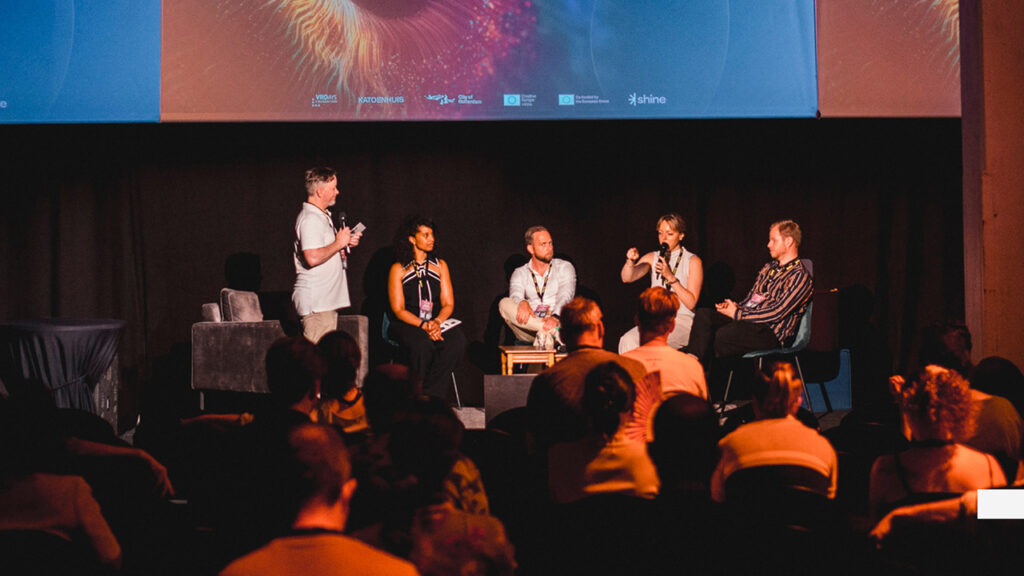
The programme also included strategic industry perspectives. Jeremy Dalton’s opening keynote, “Scaling Across Europe”, addressed the shift from fragmented pilots to scalable XR deployment across organisations. His remarks echoed the now pre-dominant talking point featured by almost every speaker in Europe: that XR or virtual worlds are no longer just pilots but are finding sustainable, mainstream adoption within the workflows of major corporations. At this point, the sentiment risks becoming a cliche, if it isn’t one already, but it does reflect the confidence held by prominent voices in the European virtual worlds ecosystem that a near era of XR adoption is underway.
The Virtual Worlds Association was also very present to connect with industry and research stakeholders and discuss the EU’s Virtual Worlds Partnership, the development of the Strategic Research and Innovation Agenda for virtual worlds and Web 4.0, and the new CSA project, NOVA, which they will be executing over the coming three years. For OPENVERSE, this was particularly relevant as NOVA follows OPENVERSE in the sequence of CSAs supporting XR and virtual worlds in Europe through the Horizon Europe programme.
XR4Europe also participated as a production partner for IMPULSE, the annual programme supporting selected immersive creative and entrepreneurship projects. The selected teams pitched on stage and took part in meetings with industry professors throughout the event.
XR4Europe was joined at ITW by many of its members that have actively participated in OPENVERSE webinars and workshops, such Eirmersive, represented by Camille Donegan, who contributed to the European creative and immersive ecosystem dialogue. Cloud Atlas, represented by Vytautas Bernotas, was presented in the EU Pitch Lounge session “Inclusion, wellbeing and a safer digital life”, alongside projects focused on climate education, student wellbeing and safer social VR. Cloud Atlas presented its work on Fog-as-a-Service, addressing the low-latency infrastructure required for real-time XR applications. Changefied demonstrated applied VR solutions for training self-reliance, procedural memory, social skills and executive functions through practical 6DoF VR scenarios. These examples reflect the diversity of XR adoption pathways, from hardware innovation and immersive storytelling to health, education and social impact.
The 2026 edition of ITW showed that the future of immersive technologies is not only being shaped through technical development, but also through funding models, cultural production, regional investment, ethical frameworks, policy agendas and practical matchmaking between stakeholders. The discussions in Rotterdam also reinforced a central premise of OPENVERSE: virtual worlds must be developed through collaboration between the people building the technologies, the organisations applying them, the communities affected by them and the policy actors shaping their conditions.
XR4Europe will continue the discussion after the event with a LinkedIn Live recap on 8 July at 13:00 CET. Laetitia Bochud, Alexandra Gérard and Thierry Koscielniak will join Michael Barngrover for an in-depth discussion intended for audiences who were unable to attend in person, as well as participants who want to revisit the main discussions and hear additional perspectives from people who were present in Rotterdam.