


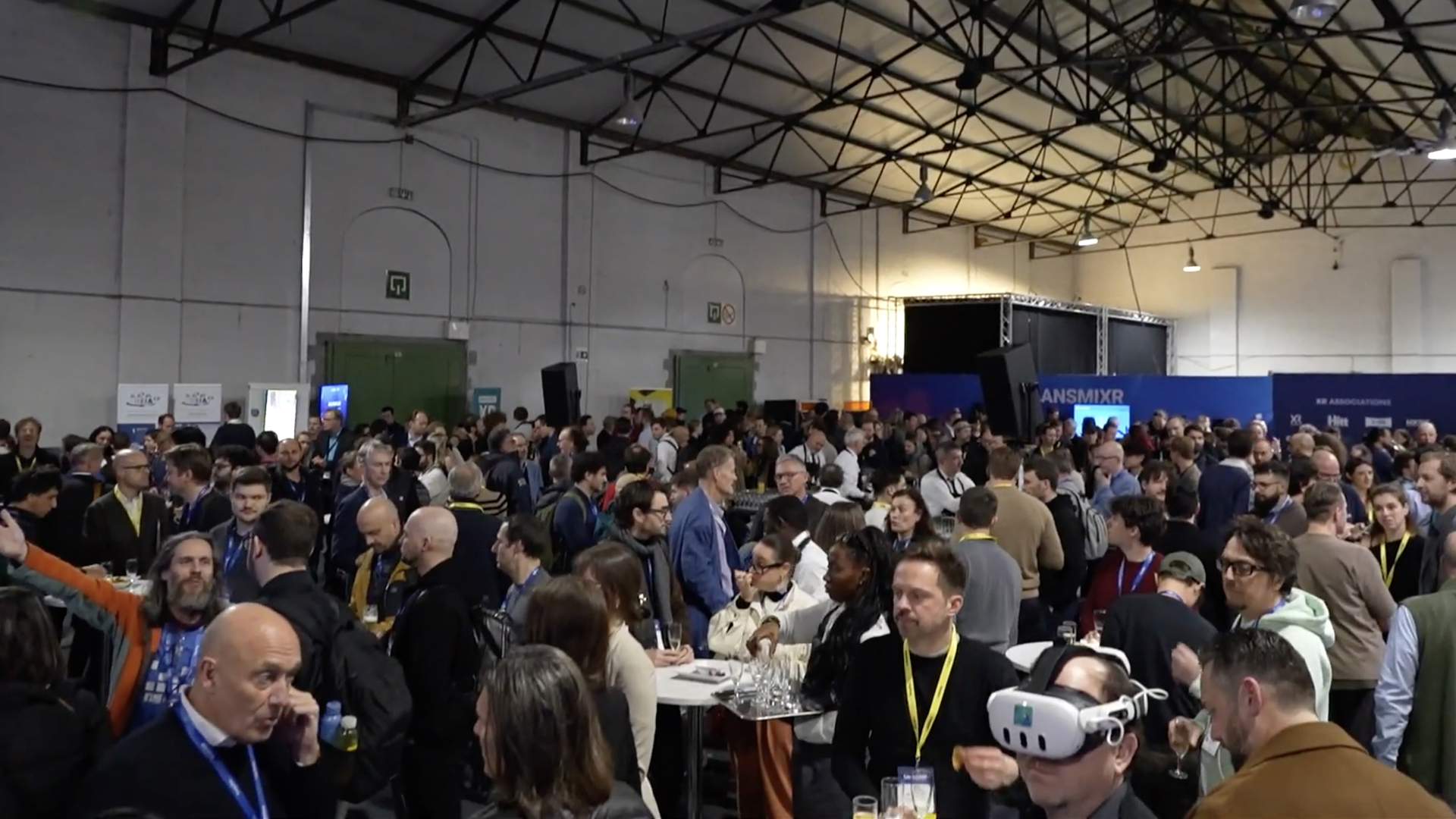
From 8 to 10 December 2025, Brussels hosted UnitedXR Europe 2025, bringing together more than 2,100 registered participants from across Europe and beyond. Held at Maison de la Poste and Shed 1, UnitedXR marked a first-of-its-kind collaboration between Stereopsia and AWE Europe, uniting two major event communities into a single, large-scale platform for immersive technologies. Across three days, UnitedXR combined a high-level conference programme, industry and research exhibition, scientific conference, Creative and Cultural Industries (CCI) marketplace, and extensive networking spaces for European associations, clusters and EU-funded projects. The programme spanned European policy and strategy, enterprise adoption, scientific research, creative XR, standards, startups and investment, reflecting the growing maturity and diversity of Europe’s XR and virtual worlds ecosystem.
The OPENVERSE project was officially represented at UnitedXR Europe 2025 by partner Lukasz Porwol from the University of Galway and by partner Michael Barngrover from XR4Europe. Beyond participation, OPENVERSE played an active role in shaping the event through official OPENVERSE sessions and high-visibility contributions that aligned directly with the project’s mission to support open, interoperable and collaborative virtual worlds in Europe.
Opening the Event and Setting the European Context
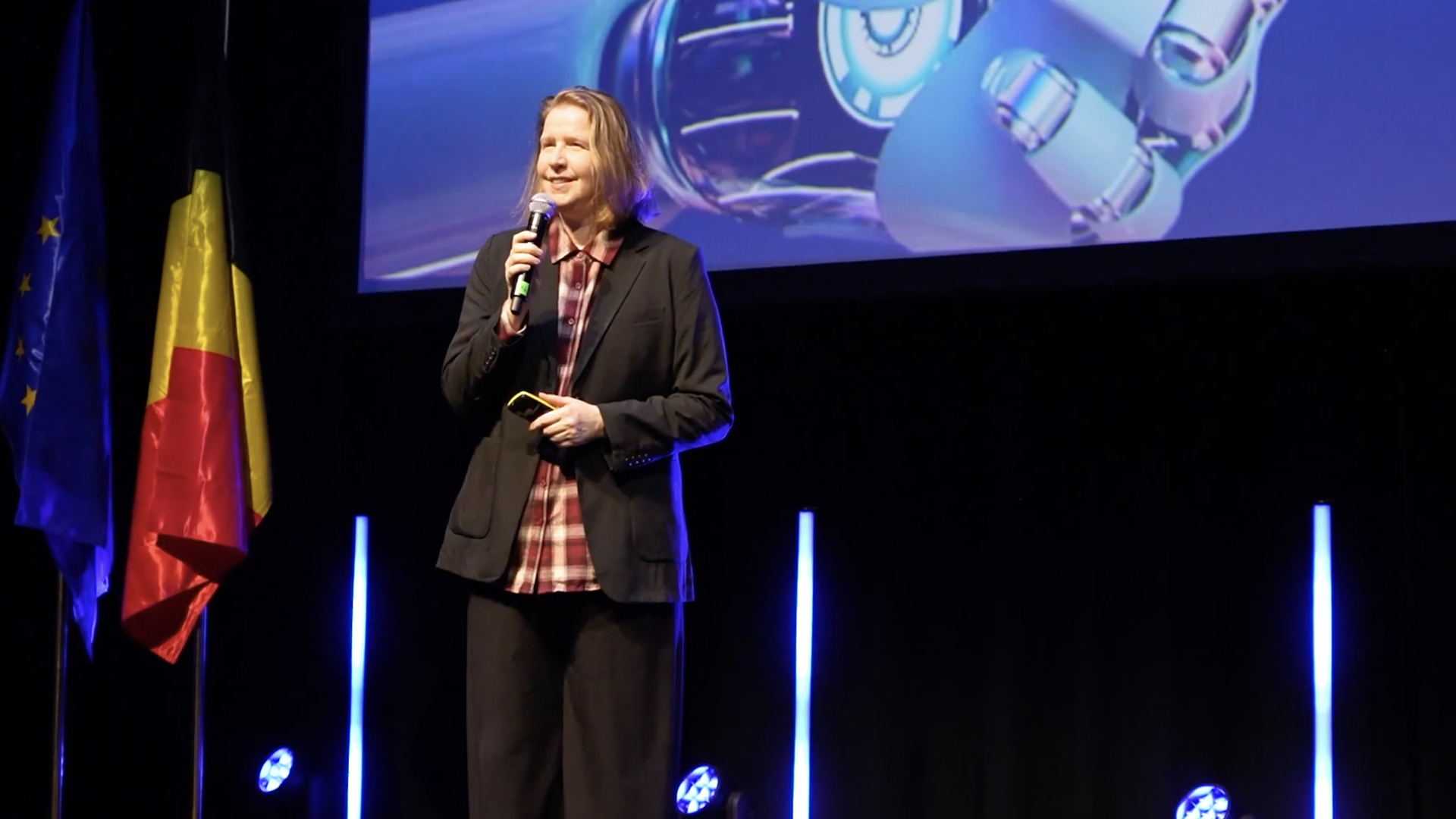
UnitedXR Europe opened with a joint welcome by Alexandra Gerard (UnitedXR & Stereopsia) and Michael Barngrover (XR4Europe). Following this opening address, Alexandra Gerard exited the stage and Michael Barngrover took over as Master of Ceremonies for the remainder of the morning.
In this role, Michael introduced Anne Bajart (European Commission, DG CNECT) for her keynote on the EU’s Virtual Worlds and Web4.0 strategy, highlighting Europe’s coordinated approach across safety, growth, interoperability and sustainability, and outlining opportunities under Horizon Europe and Digital Europe. He also introduced the subsequent morning speakers, including Matthieu Worm, President of the newly established Virtual Worlds Association, and moderated a panel on the benefits of virtual worlds standards, focusing on openness, interoperability and international alignment. The morning concluded with a fireside chat hosted by Meta. These sessions anchored UnitedXR firmly within Europe’s policy, standards and ecosystem-building agenda.
Mapping EU’s XR Ecosystems vs EU Research Meets OpenXR
The first day featured the OPENVERSE session “Mapping Europe’s XR Ecosystems”, moderated by Lukasz Porwol. The panel examined how national and regional XR mapping initiatives help build a more coherent understanding at the European level, supporting improved policymaking and cross-border collaboration. Representatives from diverse European XR ecosystems discussed common challenges, existing data gaps and opportunities for better alignment. The conversation underscored the value of locally grounded ecosystem research in informing European strategies, reports and funding priorities, clearly reflecting OPENVERSE’s mission to strengthen coordination between national initiatives and European frameworks.
Day 1 also featured another key session: Michael Barngrover moderated the workshop “European Research Meets OpenXR”, held as an official OPENVERSE event in collaboration with the Khronos Group. The workshop aimed to clarify how European SMEs, researchers and EU-funded projects can engage with the OpenXR standard not only as adopters, but also as active contributors.
Participants had the opportunity to interact directly with Neil Trevett and Emily Stearns from the Khronos Group, gaining insight into governance structures, contribution processes and alignment with European research and innovation efforts. During the session, Emily Stearns publicly announced for the first time that the Khronos Group has initiated the establishment of an official European branch. This development marks an important step toward deeper European involvement in global open standards and strongly aligns with OPENVERSE’s commitment to interoperability and openness.
Community Futures Beyond the Main Programme
On the evening of Day 2, Tuesday 9 December, Lukasz Porwol also co-hosted an MIT Reality Hack evening conference and networking event, organised with MIT Reality Hack, the Brussels-based artist collective ChatNoir, and community partners. The event featured a town-hall-style discussion on XR futures, covering immersive space, cinema and 360° video, community building, and cultural experiences, followed by informal networking. This complementary event highlighted the role of grassroots, experimental and community-driven dialogue alongside large-scale industry and policy platforms.
OPENVERSE Impact and Access to Recordings
UnitedXR Europe 2025 demonstrated the scale, diversity and growing coherence of Europe’s XR and Virtual Worlds ecosystem. Within this context, OPENVERSE’s contributions stood out through concrete actions:
- Supporting national and regional ecosystem coordination
- Enabling direct engagement with global open standards bodies
- Lowering barriers for European SMEs and researchers to participate in OpenXR
- Strengthening Europe’s role in shaping open, interoperable virtual worlds
Recordings from each day of UnitedXR Europe 2025 are available online, including the main stage sessions, OPENVERSE panels and workshops referenced above. OPENVERSE encourages stakeholders to explore this content to gain deeper insight into the discussions shaping Europe’s immersive technologies future.
OPENVERSE is proud to have contributed to this milestone event and looks forward to building on the collaborations and momentum generated in Brussels.