


Between 9-13th June 2025, the Department of Design at Politecnico di Milano (POLIMI), an OPENVERSE consortium partner, conducted an intensive five-day co-creation workshop, in the setting of the School of Design. The workshop marked a milestone in the project’s co-creation field-testing phase, exploring the potential of Virtual Worlds (VWs) to enhance collaborative innovation, thereby grounding the co-creation methodology in real user experience and hands-on applications.
Scope and Relation with the OPENVERSE Project
The workshop is part of the activities aimed at the “Elaboration and implementation of co-creation methodologies” (T1.3), which aims to develop guidelines and tools for co-creation in immersive environments across different sectors. The results will feed into the first edition of the OPENVERSE Handbook (Deliverable 1.1) and support the project’s broader goal of equipping stakeholders—including those in sectors like tourism, real estate, fashion, and healthcare—with open-source strategies for innovation through immersive co-design.
The workshop is part of a series of activities to critically explore how VWs can function as settings and catalysts for co-creation, across industries, by experimenting with VW affordances and design tools to understand how these environments can enable, shape, or constrain collaborative design. Drawing from the conceptual and methodological framework of OPENVERSE—including literature review and scoping of co-creation tools developed in prior project phases—participants are equipped with theoretical and operational tools to assess, adapt, extend, and organise co-creation within immersive digital spaces.
Participants
This workshop was initiated as a result of an open call for participation, disseminated within the School of Design at Politecnico di Milano as part of the project’s Task 1.2 “Calls for participation in the co-creation activities—(open-verse.eu/open-calls). This workshop specifically targeted master’s-level students with prior experience and strong interest in design, VWs and immersive media. From the call a curated cohort of 36 designers in-training was selected to take part in the intensive co-creation workshop. Their backgrounds span communication design, interior, arts, fashion, product-service systems, and digital interaction, allowing for a multi-perspective engagement with the potentials and limitations of co-creation in immersive environments. This curated cohort formed a core testing ground for OPENVERSE’s co-creation tools and methods, serving both as contributors to the project’s methodological development and as representative users exploring the practical challenges of designing within VWs.
Immersive Affordances
The workshop explored “immersive affordances” as opportunities for action or interactions that are made possible by immersive environments—such as virtual reality (VR), augmented reality (AR), or other interactive, multisensory technologies. Spatial narrative, embodiment, symbolic interaction, can support multi-stakeholder collaboration.
Workshop High-level Structure
The workshop followed a structured design sprint, guiding teams through:
- Identification of co-creation objects within industry contexts (e.g., language learning, urban policy planning, techwear testing, adult entertainment);
- Selection and analysis of a selection of VW platforms;
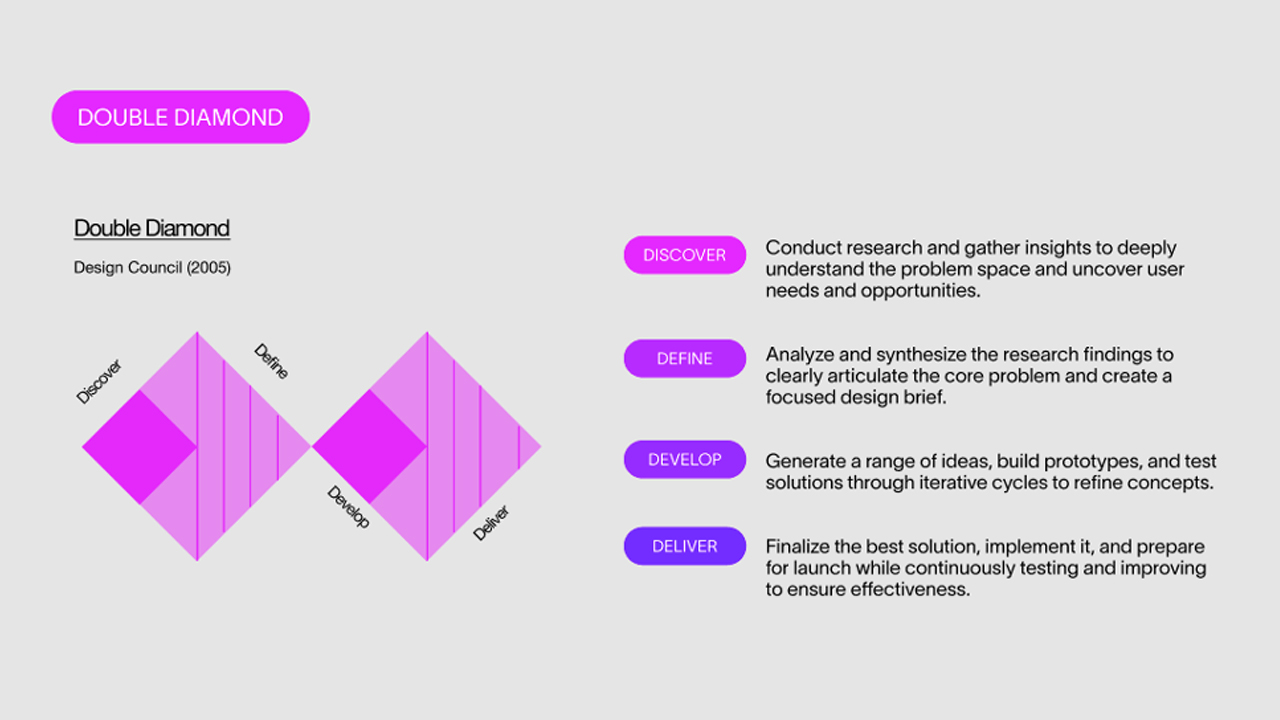
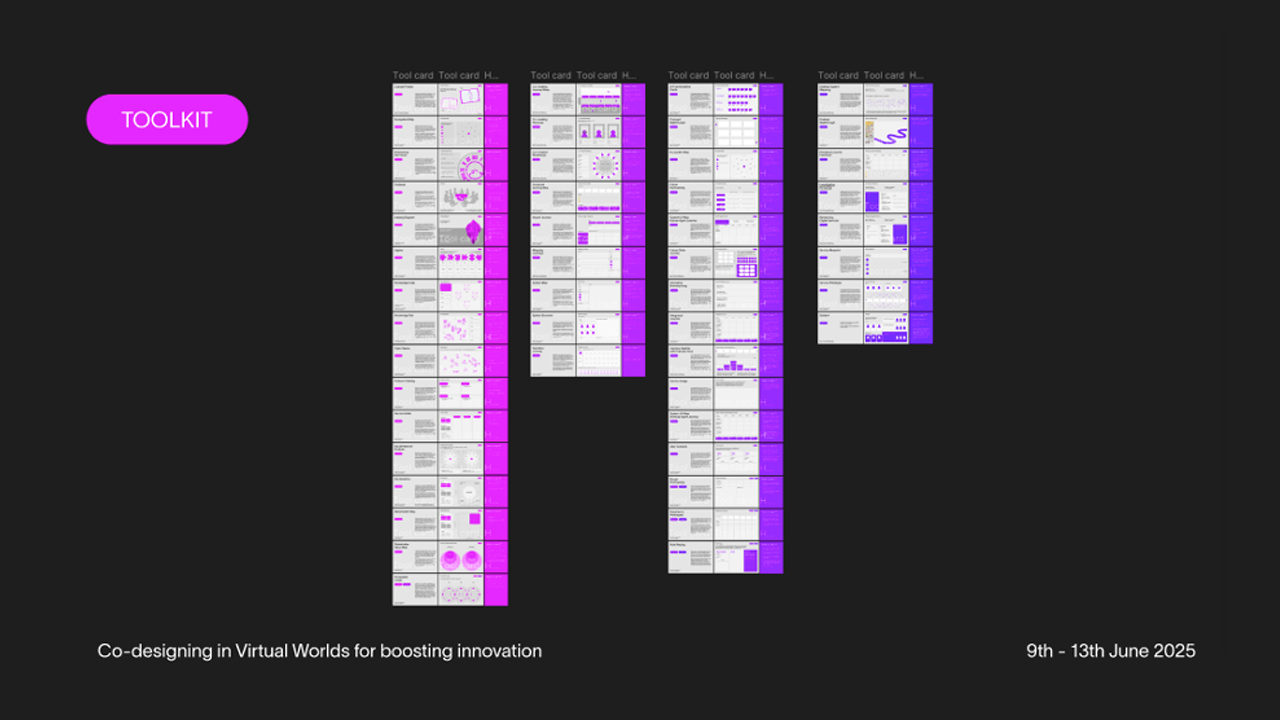
- Exploration of the OPENVERSE toolkit consisting of 48 tools mapped to the four phases of the Double Diamond design framework (Discover, Define, Develop, Deliver).
- Adaptation and prototyping of one selected tool per team within the chosen VW;
- Reflection and assessment of how immersive affordances shaped collaboration and outcomes.
The Co-creation Journey
The workshop offered a structured yet exploratory journey into how to organise co-creation in VWs as sites for immersive co-design. Participants could choose among eight VW platforms—Engage VR, Arthur, Resonite, Fortnite, Spatial, Rec Room, VRChat, and Sansar—each presenting distinct levels of technological maturity, interaction models, and affordances, from enterprise-oriented environments to socially-driven gaming platforms. Through hands-on engagement, split in 7 teams, participants assessed each platform’s potential to support co-creation by posing and responding to three guiding questions:
- What are the key affordances of VWs that enable or hinder co-creation/co-design in or for industries?
- What strategies or “hacks” can be applied to enhance these affordances and better support innovation-driven co-design processes?
- What objects, services, or experiences can be co-designed by leveraging the specific affordances of selected VWs?
Working across diverse industries—ranging from education, fashion, and sports to cultural heritage, smart cities, and adult entertainment—participants identified specific co-creation challenges and selected a VW for experimentation. They explored the OPENVERSE toolkit, chose one tool to adapt, and mapped how its implementation would be shaped by the platform’s affordances. Each team formalised a tool translation and developed an operational prototype within the VW environment, with particular attention to immersion, roleplay, adaptability, and stakeholder relevance. The journey concluded with reflective insights and recommendations, offering grounded lessons for future design interventions in Virtual Worlds.
Workshop Results & Key Insights
Seven immersive translations of co-creation tools for VWs were developed, demonstrating how immersive affordances can support multi-stakeholder collaboration. Five of the seven groups chose Spatial, while VRChat and Engage VR were used by one group respectively. Most selected tools were adapted to support either early divergent (Discover: 2) or late-stage experiential validation (Deliver: 4) phases of the Double Diamond framework. Tools from the Develop phase were not experimented.
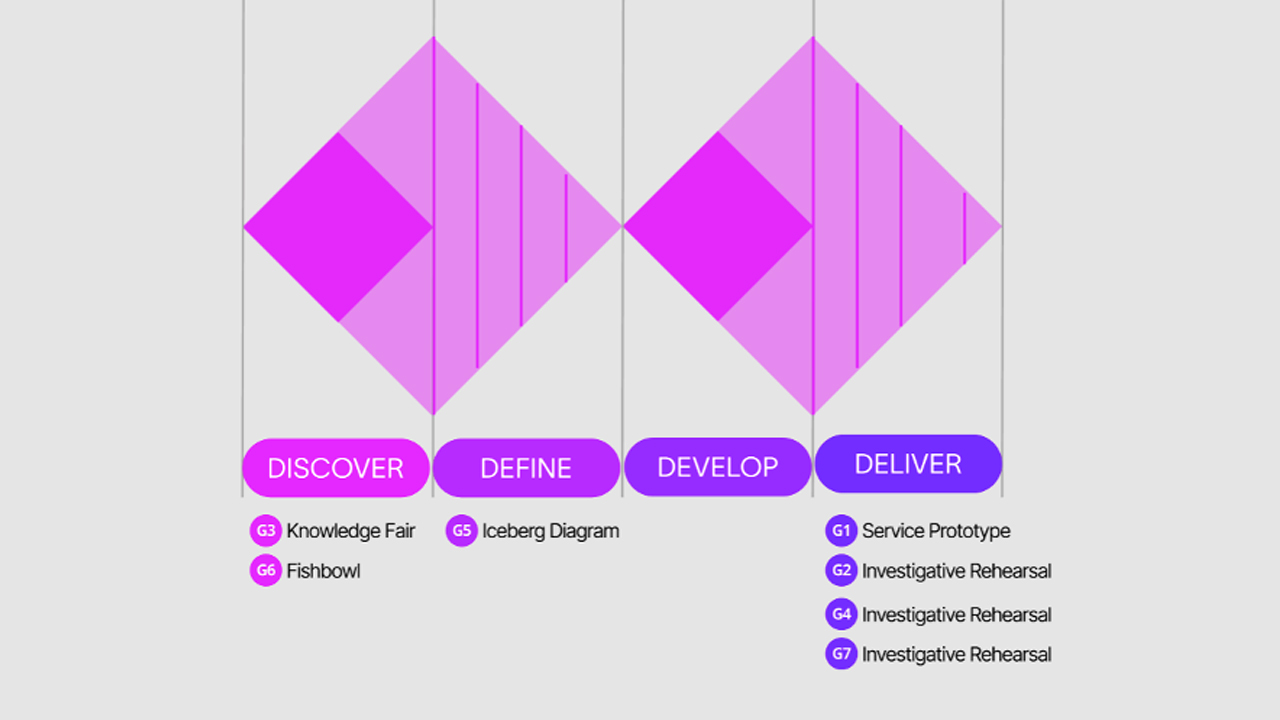
Below the main results of each group, pointing out domain, VW, co-creation tool:
- Group 1: Sport / Spatial / Service Prototyping. Co-design the co-watching experience for football matches using spatial journey mapping and real-time feedback. The prototype enabled collaborative exploration of a shared viewing experience, though the platform’s limitations in supporting early ideation and content manipulation were noted.
- Group 2: Fashion / Unity + Spatial / Investigative Rehearsal. Explored techwear testing via role-playing scenarios, combining Unity for high-fidelity simulation and Spatial for collaboration. While the setup enabled embodied interaction and experiential testing, it revealed technical challenges around cross-platform integration and limited real-time editing features.
- Group 3: Marketing / Spatial / Knowledge Fair. Created a virtual knowledge exchange format enabling parallel ideation and informal discussion. The “Knowledge Fair” structure supported content sharing and spatial storytelling, but issues with object control, chat integration, and persistent annotations limited deeper iteration.
- Group 4: Adult Entertainment / VRChat / Investigative Rehearsal. Addressed ethical concerns in adult service design using avatar-based roleplay. The emotionally rich environment enabled high empathy engagement and critical discussion of taboo topics. However, the lack of moderation tools and feedback capture features raised concerns for iterative co-design.
- Group 5: Museums / Spatial / Iceberg Diagram. Used spatial layering to prototype emotional visitor journeys in a museum context. The Iceberg Diagram allowed teams to visually represent surface vs. latent visitor experiences. While effective for reflection, the interaction remained largely passive and exploratory rather than participatory.
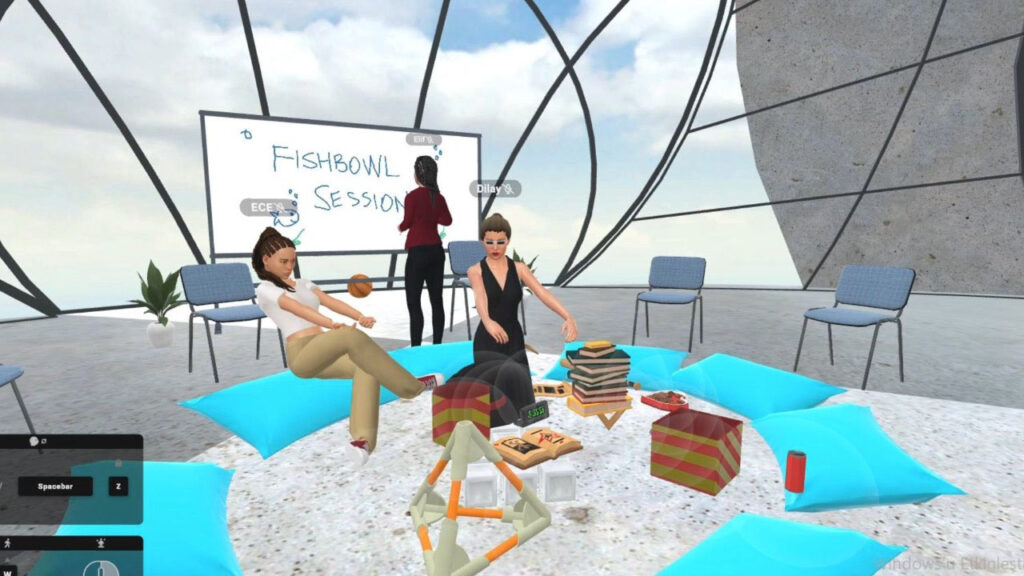
- Group 6: Education / Engage VR / Fishbowl. Designed a language learning session using structured dialogue formats in VR. The fishbowl setup fostered immersive conversation and role-based participation, but technical glitches, such as disappearing sticky notes, impacted content persistence and continuity.
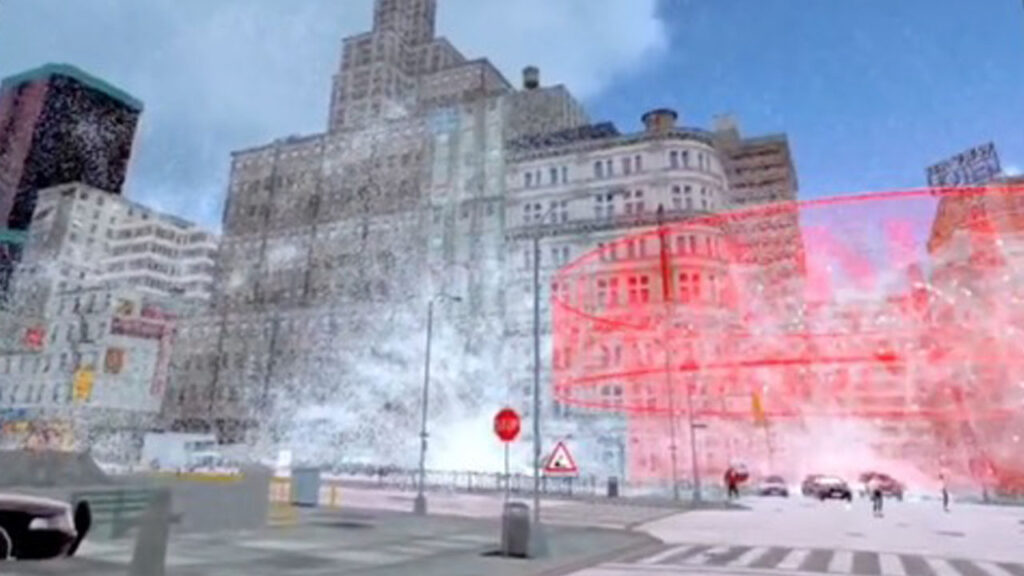
- Group 7: Smart Cities / Spatial / Investigative Rehearsal. Simulated urban policy planning through role-based walkthroughs and scene chaining. Participants experimented with visualising complex trade-offs in governance, showing strong potential for immersive public sector prototyping. Challenges included platform rigidity in scene transitions and role coordination.
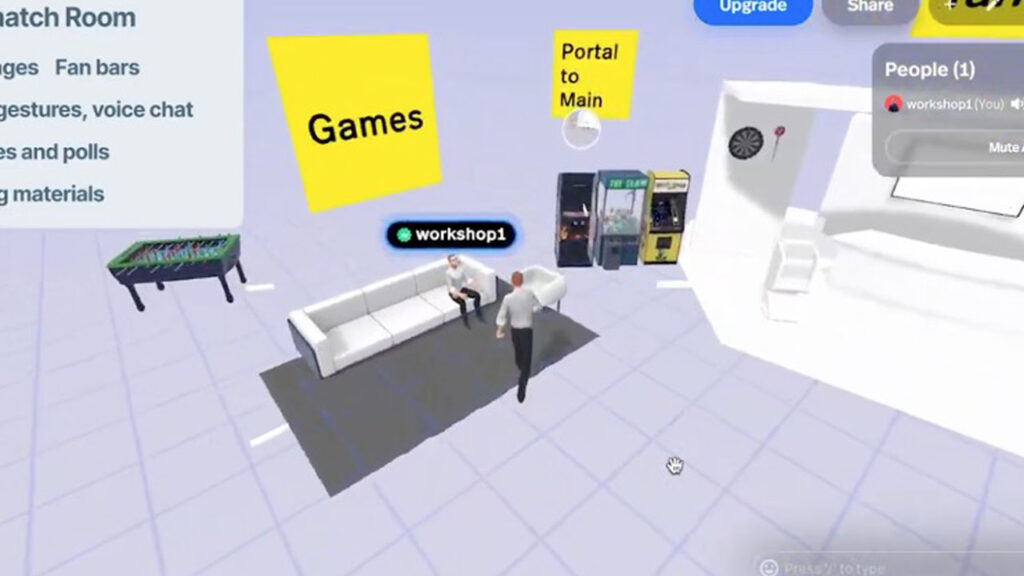
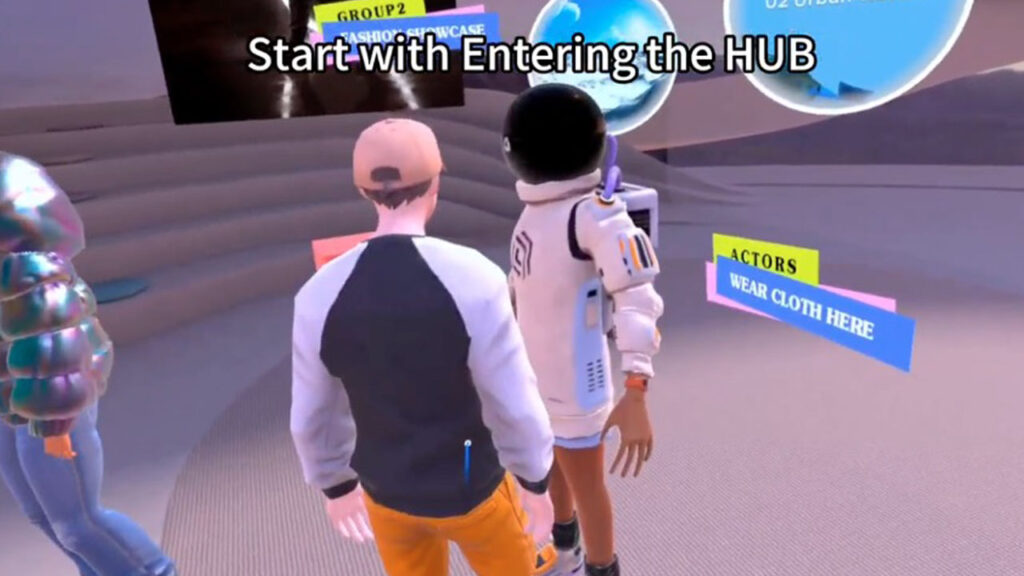
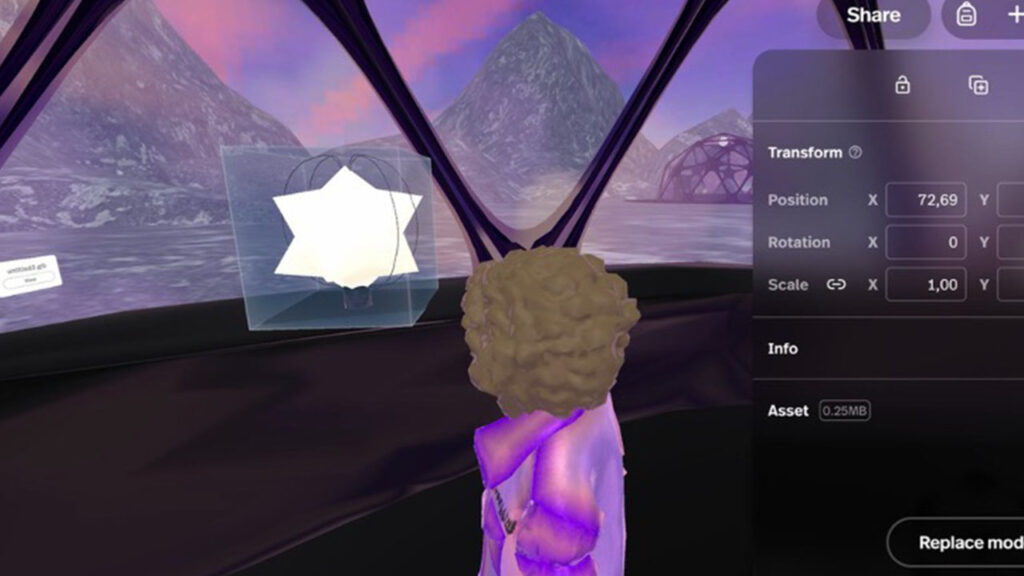
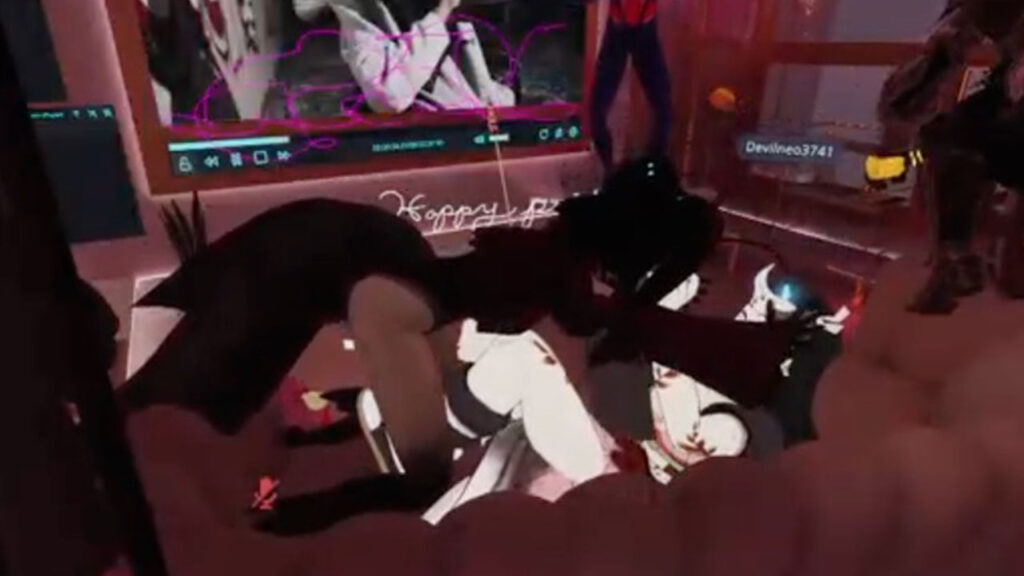
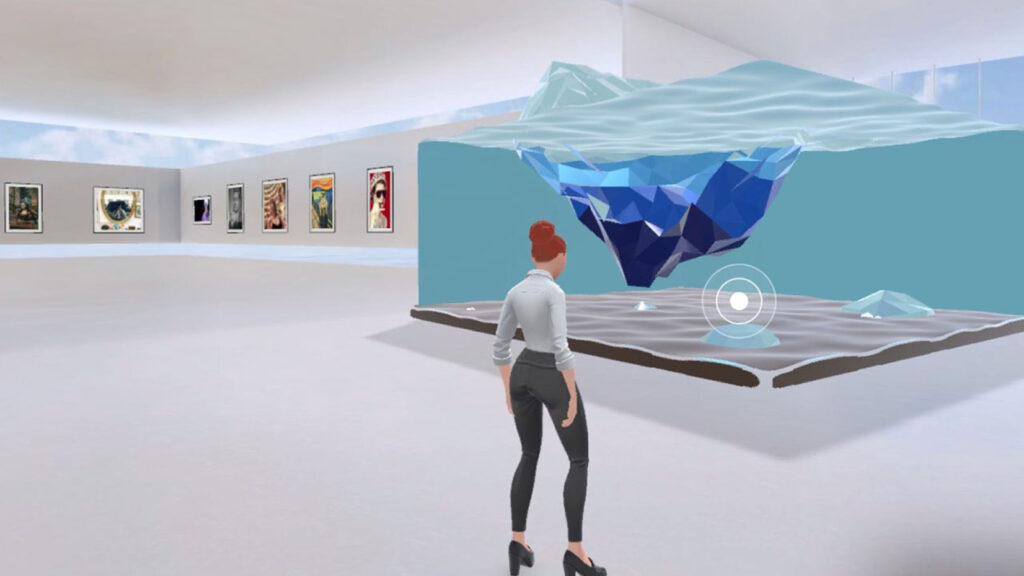
The workshop highlighted the VW potential to support immersive, experience-driven co-creation—but also revealed important design dependencies. Participants found that VWs enabled emotionally engaging and socially rich collaboration, especially when leveraging spatial storytelling, embodiment, and roleplay. However, technical limitations—such as often limited or insufficient content persistence, minimal annotation capabilities, and constrained collaborative editing—frequently hindered deeper iteration. Tools that demanded strong feedback mechanisms, asynchronous collaboration, or systematized analysis faced friction in platforms that lacked persistent data structures or open co-editing.
A critical insight across teams was that translating co-creation tools into VWs requires conceptual abstraction: traditional tools must be reimagined symbolically to fit spatial and interactive paradigms. This rethinking opens up new expressive possibilities, enabling designers to represent process steps and stakeholder roles through immersive metaphors, embodied scenarios, and symbolic spatial cues. In this context, co-creation is boosted when experiences are carefully structured with clear interaction flows, staged environments, and explicit prompts to guide participant engagement.
Moreover, many teams adopted hybrid workflows, combining multiple platforms—such as Figma, Unity, and Spatial—to support different phases of collaboration, from early ideation and tool modeling to immersive testing and documentation. This layering of platforms was often necessary to bridge immersion with coordination and to compensate for feature gaps in any single environment.
Finally, the workshop confirmed that immersion and presence—enabled by spatial metaphors, voice interaction, and avatar embodiment—play a crucial role in enhancing participation and engagement. Participants reported feeling more connected to the design process when they could navigate environments, assume roles, and respond to sensory or visual stimuli. These findings reinforce the methodological principle that experiential context shapes collaboration—and that Virtual Worlds are especially well-suited for simulating complex systems, prototyping future scenarios, and enabling multi-layered stakeholder reflection.
These insights will shape the OPENVERSE Handbook (Deliverable 1.1), helping ensure that future co-creation practices within immersive environments are both methodologically sound and operationally effective across varied industry contexts. This includes guidance on how to select and sequence co-creation phases within VWs by interpreting the unique affordances of each platform—not through a fixed formula, but through situational translation. That is, the effectiveness of tool adaptation depends on how spatial, visual, and interactive dimensions are creatively leveraged to serve the tool’s underlying intent. This underscores the need for inspirational guidance, adaptable frameworks, and concrete examples that show how different co-creation tools can be meaningfully enacted in immersive environments.
Conclusion
Across the five days, participants (i) navigated and experimented within different VW platforms, (ii) applied and adapted co-creation tools and methodologies provided by OPENVERSE, (iii) explored industry sectors that stand to benefit from VW-based co-design, and (iv) developed hands-on design proposals situated within those sectors. The workshop confirmed that co-creation in Virtual Worlds is technically feasible, methodologically rich, and emotionally powerful, but is also infrastructure-dependent and highly context-sensitive. Overall, the workshop underscored both the transformative potential and the infrastructural fragility of immersive co-design. While VWs can unlock powerful forms of collaborative creativity and stakeholder engagement, their efficacy depends on thoughtful orchestration, strategic platform use, and continued evolution of the co-creation toolset.
Future directions should focus on building smarter bridges between immersive engagement and co-design logic to sustain participation, learning, iteration, and collective ownership of the design process.